
DUI Arrests on I-40 Through Wilson County: What Happens Next and How Turnbow Law Can Help
I-40 between Mt. Juliet and the Smith County line is one of the most heavily patrolled stretches of interstate in Middle Tennessee. Tennessee Highway Patrol runs saturation details there regularly, Mt. Juliet PD works the exits around Providence and Beckwith Road, and Lebanon PD handles the corridor near South Hartmann and South Cumberland. If you’ve been arrested for DUI on that stretch, the hours after the stop are disorienting, the paperwork is confusing, and the penalties that start stacking up happen faster than most people realize. Turnbow Law handles DUI cases across Wilson County regularly, and the same questions come up almost every time.
Here’s what actually happens after a DUI arrest on I-40 through Wilson County, and what decisions matter most in the first days and weeks.
The Traffic Stop and What Officers Are Watching For
DUI stops on I-40 almost always start with a traffic violation. Speeding, weaving within a lane, following too closely, or a broken taillight gives an officer the legal basis to pull you over. Once the stop happens, the officer’s job shifts to looking for signs of impairment: the smell of alcohol, slurred speech, red or watery eyes, an open container, or admissions during casual questioning.
If the officer suspects impairment, you’ll be asked to step out of the vehicle for field sobriety tests. These typically include the horizontal gaze nystagmus test, the walk-and-turn, and the one-leg stand. The tests are standardized under NHTSA guidelines, but they’re administered on the shoulder of an interstate with traffic noise, uneven pavement, and flashing lights in your eyes. That environment affects performance in ways that have nothing to do with impairment, and it’s one of the first areas a defense attorney examines.
You are not legally required to perform field sobriety tests in Tennessee. Refusing them is not a crime, though officers rarely explain that clearly during a stop.
Implied Consent and the Breathalyzer Decision
Tennessee’s implied consent law under Tenn. Code Ann. § 55-10-406 is where a lot of DUI cases turn. By driving on Tennessee roads, you’ve legally consented to a chemical test of your breath or blood if an officer has reasonable grounds to believe you’re impaired. Refusing the test carries consequences separate from the DUI itself.
A first-time refusal results in a one-year license revocation. Refusal during a DUI stop where someone was injured can be charged as a Class A misdemeanor. Refusing does not prevent the DUI charge from moving forward, and officers can and often do obtain a search warrant for a blood draw when someone refuses the breath test.
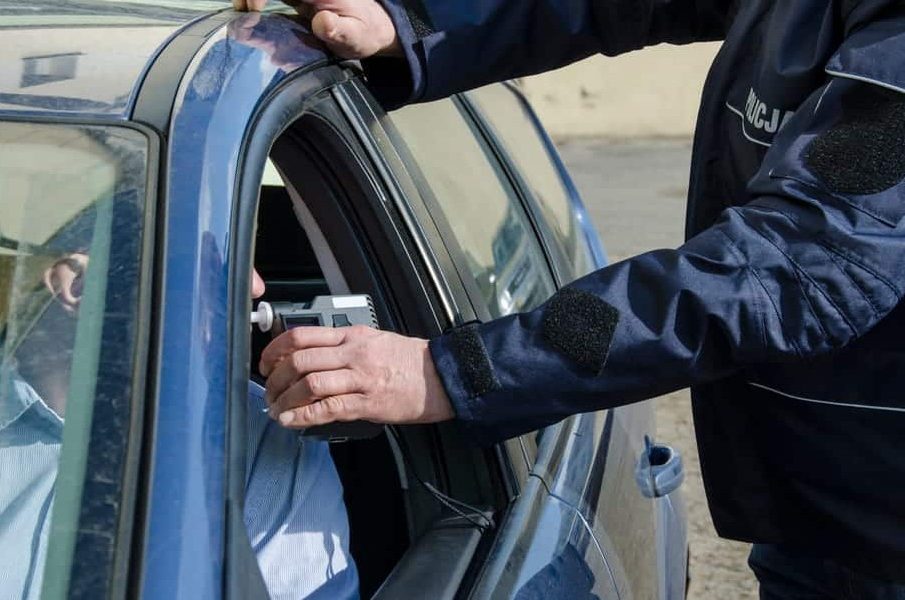
The decision to refuse or submit is complicated and depends on the specific circumstances of the stop. What matters after the fact is how the test was administered, whether the officer followed proper observation periods, whether the breath machine was properly calibrated, and whether blood samples were handled per Tennessee Bureau of Investigation protocols. These procedural details are where DUI cases get won.
Booking at the Wilson County Jail
After arrest, you’ll be transported to the Wilson County Jail for booking. Fingerprints, mugshot, paperwork, and a bond determination follow. For a first-offense DUI with no aggravating factors, bond is often set at a standard amount that allows for release within hours. Aggravating factors like an accident, injuries, a high BAC, a child in the vehicle, or prior DUI convictions can push bond higher and delay release.
You’ll receive paperwork with your first court date in General Sessions Court at the Wilson County Criminal Justice Center at 115 E. High Street in Lebanon. Missing that date results in a warrant for your arrest and forfeiture of any bond posted.
The 48-Hour Mandatory Minimum and What Else a Conviction Means
Tennessee law under Tenn. Code Ann. § 55-10-402 sets mandatory minimum sentences for DUI convictions. A first-offense DUI carries at least 48 hours in jail. If your BAC was .20 or higher, that minimum jumps to seven days. The jail time is not suspended, and it cannot be served on probation.
Beyond jail, a first-offense DUI conviction in Tennessee includes:
- A one-year license revocation
- Mandatory ignition interlock device for a period set by the court
- Fines of $350 to $1,500
- DUI school attendance
- Probation, typically 11 months and 29 days
- Restitution if property damage or injury occurred
A second-offense DUI within 10 years of the first carries a minimum 45 days in jail, a two-year license revocation, fines up to $3,500, and mandatory ignition interlock. A third offense is 120 days minimum and becomes a felony at the fourth offense, with potential state prison time.
The ignition interlock requirement is worth understanding clearly. Tennessee law requires interlock during the full license revocation period for most DUI convictions, and the device must be installed at your expense, typically $70 to $150 per month plus installation. Driving without the required interlock, or driving a vehicle without one when yours is installed, is a separate criminal offense.
How Wilson County Prosecutors Handle DUI Cases
Wilson County prosecutors take DUI cases seriously, and plea offers reflect that. First-offense cases with clean driving histories, no accident, and a BAC in the borderline range sometimes resolve through reduced charges like reckless driving, but that outcome is never automatic. It depends on the strength of the state’s evidence, the quality of the defense investigation, and the specific prosecutor handling the case.
Repeat DUIs are handled far more aggressively. Prosecutors often push for enhanced sentencing, the full statutory minimum, and restrictive probation conditions. If you’ve had a prior DUI anywhere in Tennessee or another state within the 10-year lookback period, expect the state to pursue the repeat-offender penalties.
The Wilson County District Attorney’s office also pays attention to aggravating factors that enhance a DUI charge. A child in the vehicle triggers enhanced penalties under Tenn. Code Ann. § 55-10-402(a)(4). An accident with injuries can elevate the charge to vehicular assault, which is a felony carrying years of potential prison time.
What to Do in the First 48 Hours After the Arrest
Time-sensitive things that matter:
- Do not post about the arrest on social media
- Do not discuss the case with anyone except an attorney
- Write down everything you remember about the stop, including what was said, what tests were performed, and the timing
- Save all paperwork from the arrest, including the citation, bond receipt, and implied consent form
- Contact a Wilson County DUI attorney before your first court date
Tennessee allows you to request an administrative hearing with the Department of Safety to challenge the license suspension triggered by a breath test refusal or a failed test. The window for requesting that hearing is short, and missing it forfeits the right to contest the administrative suspension.
Getting the Right Defense in Place Early
DUI cases on I-40 through Wilson County are defensible, but the defense starts early. Dashcam and body cam footage, dispatch logs, calibration records for the breath machine, and officer training records all need to be requested and preserved. Waiting weeks to hire an attorney means evidence windows close and negotiating leverage shrinks.
If you’ve been arrested for DUI on I-40 in Mt. Juliet, Lebanon, or anywhere else in Wilson County, contact Turnbow Law to go over the specifics of your stop before your first court date. The earlier the defense starts, the more options stay on the table.